

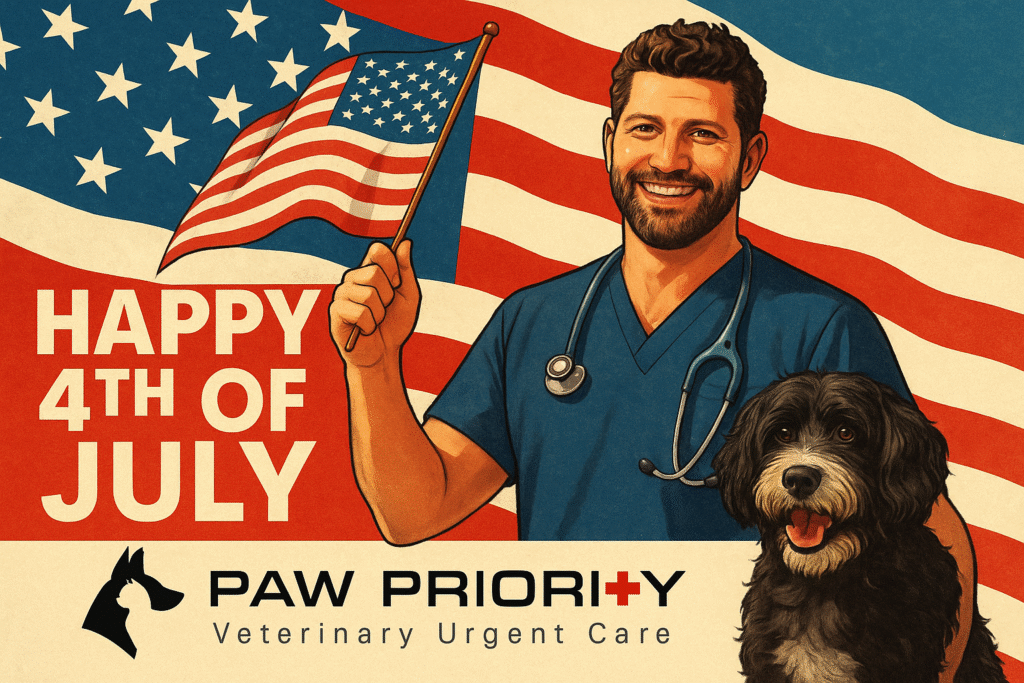
By Ezra Ameis, DVM
Independence Day may be a celebration of freedom, fireworks, and full plates—but for veterinarians, it marks the beginning of something far less festive: pancreatitis season.
Every year around July 4th, emergency clinics and urgent care vets brace for a flood of vomiting, lethargic dogs who’ve indulged in holiday scraps. Pancreatitis, or inflammation of the pancreas, is one of the most common and preventable conditions we treat this time of year—and it’s almost always tied to human food.
Whether it’s hot dog grease, rib bones, steak, buttered corn, or a rogue burger someone dropped off the grill, fatty foods overwhelm a dog’s digestive system. The pancreas, which plays a key role in digesting fat, can react violently—causing inflammation, pain, and systemic illness. Symptoms usually include vomiting, abdominal discomfort, loss of appetite, and lethargy. In some cases, dogs become dehydrated or develop dangerous electrolyte imbalances that require hospitalization.
Even well-meaning party guests can be part of the problem. “Oh, it’s just a bite,” they say, handing off a chip slathered in guac or a hunk of steak fat. But dogs aren’t built for sudden high-fat feasts—and one bite can be all it takes.
What starts as a joyful holiday can end in an emergency room visit, an IV catheter, and a bill you weren’t expecting. When I graduated ten years ago, overnight hospitalization for pancreatitis cases typically ran $2,000 to $3,000. Today, $4,000 to $8,000—or more if surgery is needed—is increasingly common.
So how can you protect your pet this Fourth of July?
No table scraps. Period. Not even “just a little.”
Secure the trash. Many cases happen after a dog gets into the garbage post-party.
Warn your guests. Let them know not to feed your dog—no matter how cute the begging face.
Stick to safe treats. Offer lean, plain meats or dog-specific goodies if you want them to feel included.
Know the signs. If your pet is vomiting, refusing food, or seems off—don’t wait. Early treatment can prevent serious complications.
While fireworks tend to steal the spotlight as a pet hazard this time of year, fatty foods are quietly doing damage in the background. This July 4th, show your dog you love them—by skipping the scraps and sticking to safety.
Dr. Ezra Ameis is an emergency veterinarian and the owner of Paw Priority in West Hollywood, a clinic providing general practice, urgent care, and acupuncture. To suggest a topic or ask a pet-related question, email hello@pp.vet.