

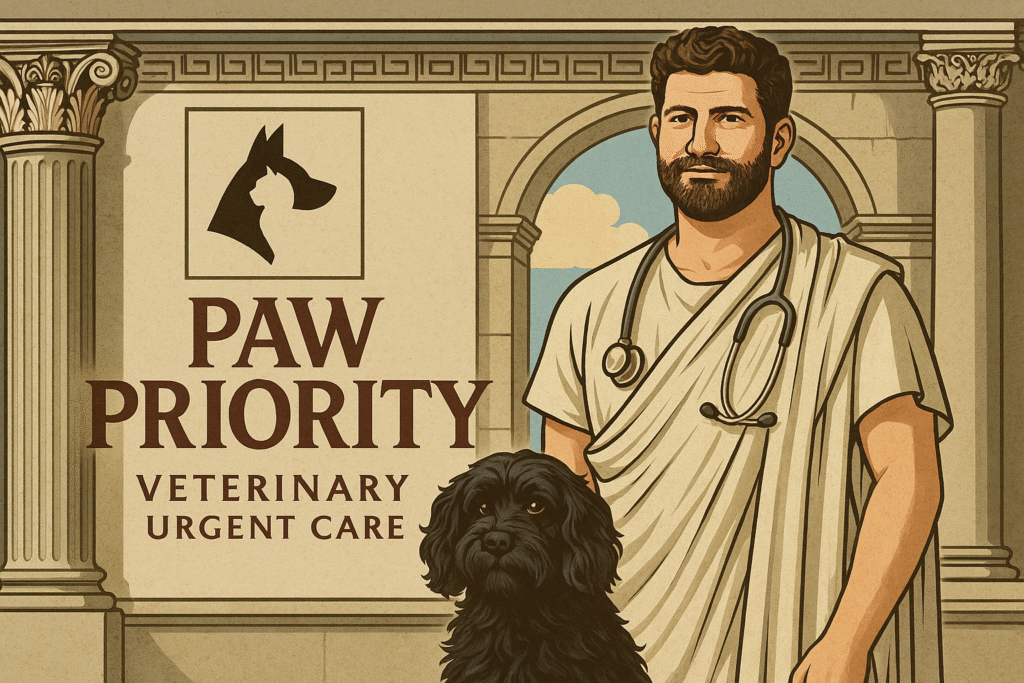
By Ezra Ameis, DVM
If Maimonides were alive today—and, say, living in Pico-Robertson with a rescue tabby named Chatool—would he schedule a neuter appointment at the local vet?
It may sound ridiculous. (It is.) But it’s also a deeply Jewish question.
Veterinarians face ethical dilemmas every day. How do we reduce suffering while still respecting the natural world? These aren’t just clinical decisions—they’re moral ones.
Jewish tradition has long grappled with the moral obligations we have to animals. The Torah and Talmud have a lot to say about animals. We’re told not to muzzle an ox while it treads grain (Deuteronomy 25:4), not to yoke a donkey and ox together (Deuteronomy 22:10), and not to cause unnecessary suffering—a principle known as tza’ar ba’alei chayim. In short: animals feel, and we are responsible.
But what about removing reproductive organs?
The Torah forbids castrating animals (Leviticus 22:24), and the Mishnah affirms this. You might think that settles it—and that my surgical schedule is a halachic horror show. But Judaism, like any living tradition, evolves. Rabbinic authorities have long debated and reinterpreted these verses, especially when human need or animal welfare is at stake.
Most contemporary halachic authorities permit—or at least tolerate—spaying and neutering when it prevents suffering or protects public welfare. With shelters already overwhelmed, many rabbis have ruled that Jews may arrange and perform sterilization in such cases. Jewish law, in this context, is compassionate—not rigid.
Spaying and neutering isn’t just about controlling population—it’s one of the most effective ways to protect a pet’s health. It lowers cancer risk, prevents life-threatening infections like pyometra, and curbs behaviors like roaming, fighting, and marking. It’s not about dominance—it’s about care. It’s stewardship.
Jewish law and animal welfare are deeply intertwined. Kosher law—with its anatomical scrutiny and emphasis on minimizing suffering—arguably laid the foundation for modern veterinary medicine. Long before vet schools, we were already asking: is the animal well, and have we treated it with care?
Maimonides, a physician as well as a rabbi, was ahead of his time on medical ethics and the sacred duty to heal —a tradition grounded in compassion, responsibility, and care. While I can’t say he’d scrub in with me for a spay, I believe he’d respect the intent—and recognize modern veterinary medicine as a continuation of the healing tradition he helped define. For their health, for their safety, for the sake of countless others—please spay or neuter your pets!
Dr. Ezra Ameis is an emergency veterinarian and the owner of Paw Priority in West Hollywood, a clinic providing general practice, urgent care, and acupuncture. To suggest a topic or ask a pet-related question, email hello@pp.vet.