

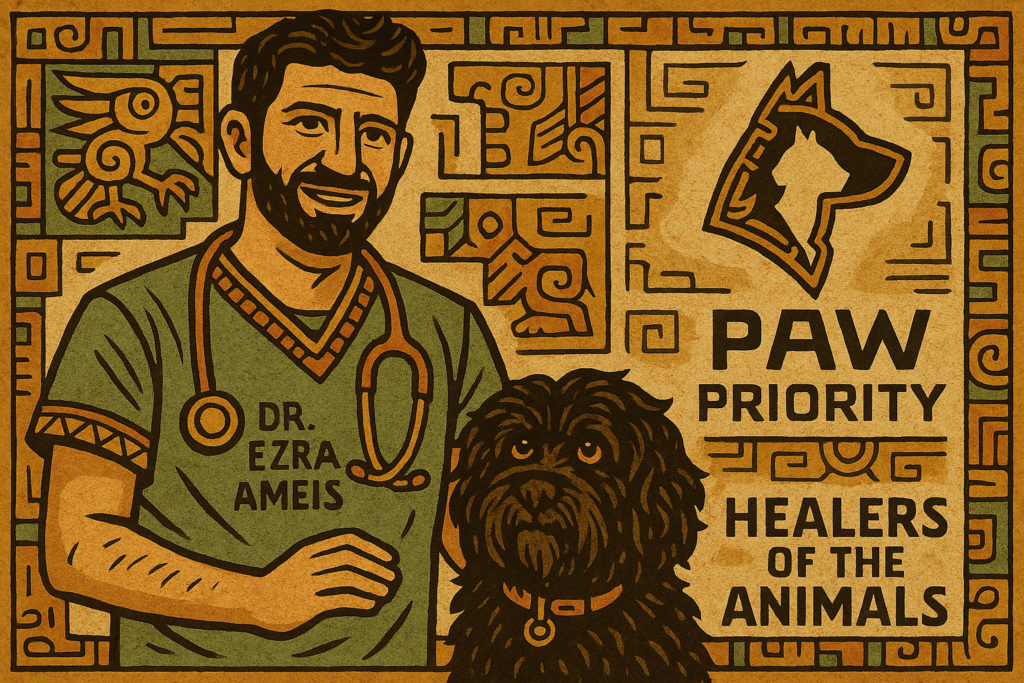
By Dr. Ezra Ameis, DVM
At my practice, we see it daily—pups who are licking their paws obsessively or sporting bald patches. There’s a good chance they’re dealing with a skin allergy.
Here’s how I generally start these cases: the first thing I do is rule out fleas. You’d be surprised how often even mostly indoor dogs manage to pick them up. If fleas are present, it’s important to know that most over-the-counter products just don’t cut it. Don’t waste your time with PetArmor, Seresto, or Advantix—I’ve found them to be unreliable.
Instead, I recommend prescription-grade flea control from the isoxazoline class: NexGard, Simparica, Bravecto, and Credelio. These medications are all highly effective and comparable. The studies are clear—they work at extremely low doses, are well-tolerated, and eliminate fleas quickly. In over ten years of practice, I’ve only seen three or four legitimate adverse reactions.
At this stage, I also treat any active skin infections with a combination of topical and/or oral antibiotics, depending on the case.
Once we’ve ruled out fleas and addressed infections, we look at whether the allergy is environmental or food-related. In my experience, environmental allergies are much more common. That’s why we often start with antihistamines or allergy-specific medications. For low-grade itch, a safe place to begin at home is over-the-counter Benadryl—about 1 mg per pound, twice daily (a 25 lb dog would get 25 mg of Benadryl twice a day).
For very itchy dogs, Cytopoint and Apoquel are much safer, more targeted options. I use them sparingly but confidently when needed.
Food allergies, on the other hand, are almost always related to the protein in the diet. We often try a novel or hydrolyzed protein trial to see if symptoms improve.
If all else fails, I refer to a veterinary dermatologist for intradermal testing. Blood allergy panels? In my opinion—and in most dermatologists’—they’re rarely useful. That money is better spent seeing someone who can actually pinpoint the issue and offer a plan.
So if your dog is red, itchy, or constantly chewing on their feet, it’s worth a trip to the vet. Relief might be just a few steps away—from medication, a new diet, or even switching to a better flea control.
Dr. Ezra Ameis is an emergency veterinarian and the owner of Paw Priority in West Hollywood, a clinic providing general practice, urgent care, and acupuncture. To suggest a topic or ask a pet-related question, email hello@pp.vet.