
Tiny needles.
Big wags.
Complementary care for arthritis, anxiety, post-surgical recovery, and chronic pain, performed by a certified veterinary acupuncturist alongside your pet’s regular medical plan.
“In my experience, acupuncture is exceptional for neck and back pain, and for the everyday musculoskeletal stuff that doesn’t always respond to medication alone. I’m also wary of piling more medications onto older dogs whose bodies are already metabolically fragile, and acupuncture is a nice fit there. It can help, and it doesn’t harm.”
Ezra Ameis, DVM
From the blog
Veterinary Acupuncture: What’s the Point?
If you want the full version of why I added acupuncture to my practice (the science, the skepticism, the cases that changed my mind), I wrote about it on The Priority Paw Blog.
Read the article →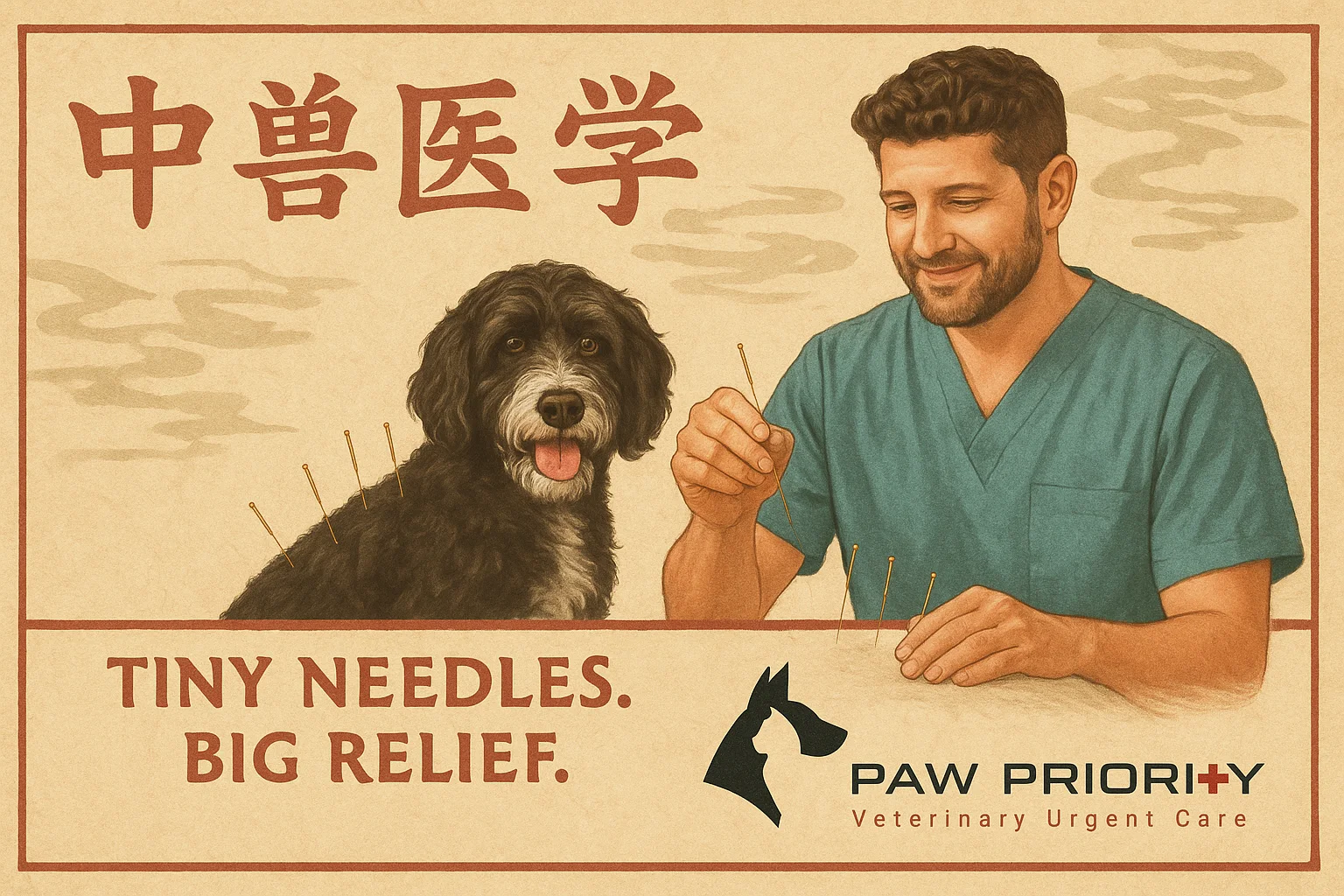
Always alongside, never instead.
Every acupuncture patient at Paw Priority gets the full Western medicine workup (exam, diagnostics, medications where appropriate), and acupuncture rides alongside as a complementary tool. It’s not an alternative to medicine. It’s an addition to it.
When acupuncture helps
Acupuncture isn’t a replacement for medicine. It’s a useful tool alongside it. Most of our patients fall into one of these groups:
Arthritis & joint pain
Hip dysplasia, elbow arthritis, IVDD, and age-related stiffness, especially in dogs whose pain meds need help.
Post-surgical recovery
Faster healing, less inflammation, and gentler reintroduction to mobility after orthopedic or soft-tissue surgery.
Anxiety & behavior
Calming effects for noise phobias, separation anxiety, and general nervous-system regulation in chronically stressed pets.
Neurological cases
Adjunct care for disc disease, nerve injury, and weakness in the hind end, particularly in dachshunds and corgis.
Cancer comfort care
Pain management and quality-of-life support for pets undergoing or finishing oncology treatment.
End-of-life comfort
Gentle, low-stress sessions to ease pain and improve mobility for senior pets in their final chapter.
How acupuncture is proposed to work
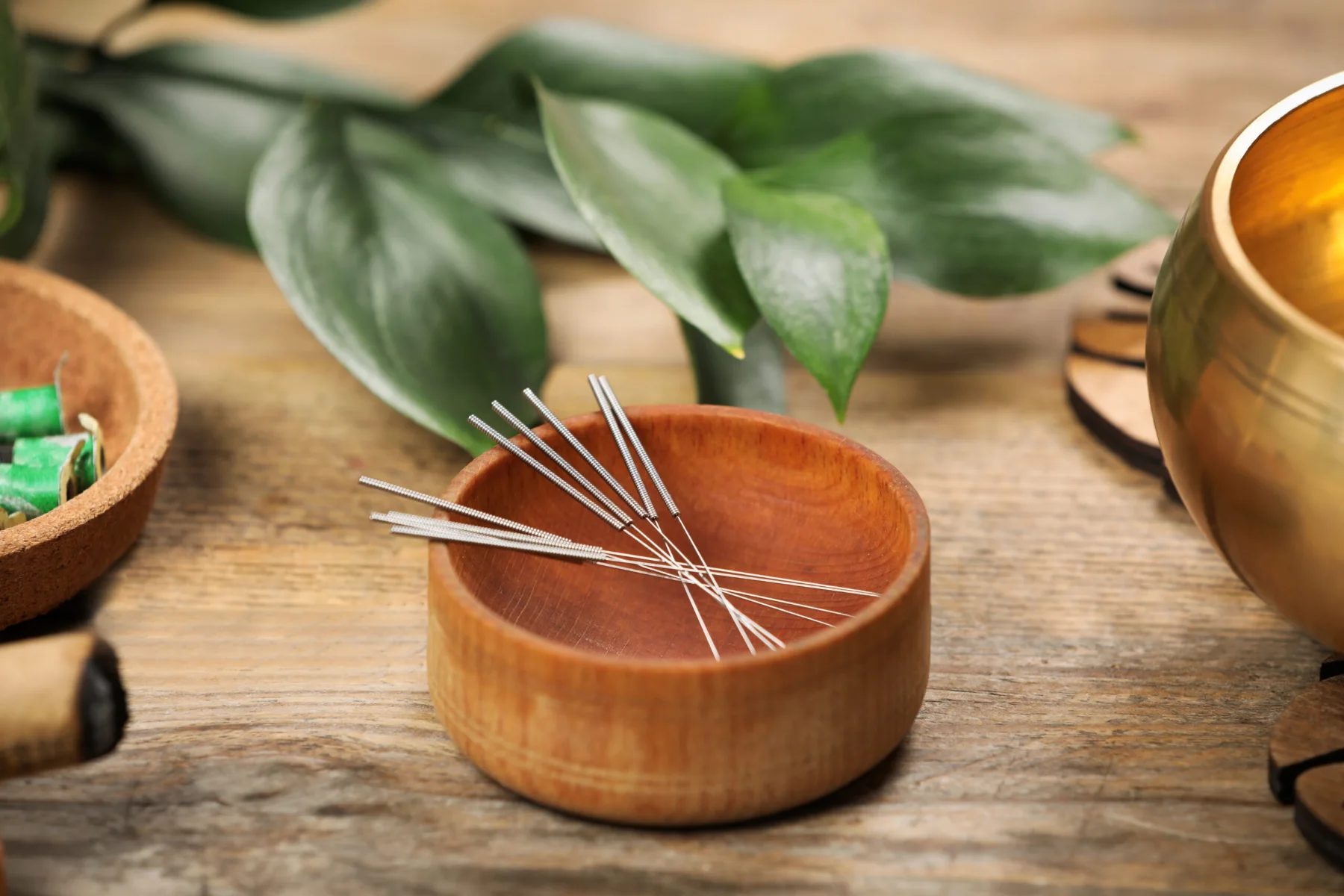
Acupuncture isn’t magic. It’s a way of working with two specific things your pet’s body already does well: circulation and pain modulation.
When a fine needle is placed in a target point, blood flow to that area increases. That extra circulation supports healing, reduces inflammation, and helps the body do what it’s already trying to do.
At the same time, the needle activates non-painful sensory nerves. Those signals travel back to the brain and compete with the pain signals on the way up, something neuroscientists call gate control. The result: less pain perceived, often without adding another medication.
Research
And recent research backs it up. A 2023 JAVMA study found that electroacupuncture at five key points significantly reduced postoperative nausea in dogs after surgery, with results matching standard anti-nausea care. Another large prospective study of 181 dogs with orthopedic and neurologic conditions showed acupuncture improved pain scores and mobility in nearly 80% of musculoskeletal cases, with significantly better outcomes for orthopedic pain compared to neurologic disease.
What a session looks like
A typical acupuncture session runs 30–45 minutes. Most pets are calm, relaxed, and many will actually fall asleep during treatment. The needles are tiny, painless, and stay in for 15–20 minutes.
- Initial consult to assess condition and design a plan
- Most pets need 4–6 sessions to know if it’s helping
- Maintenance schedule varies from weekly to monthly
- Always coordinated with your pet’s other medical care
Acupuncture is performed by a doctor who has completed formal certification in veterinary medical acupuncture.
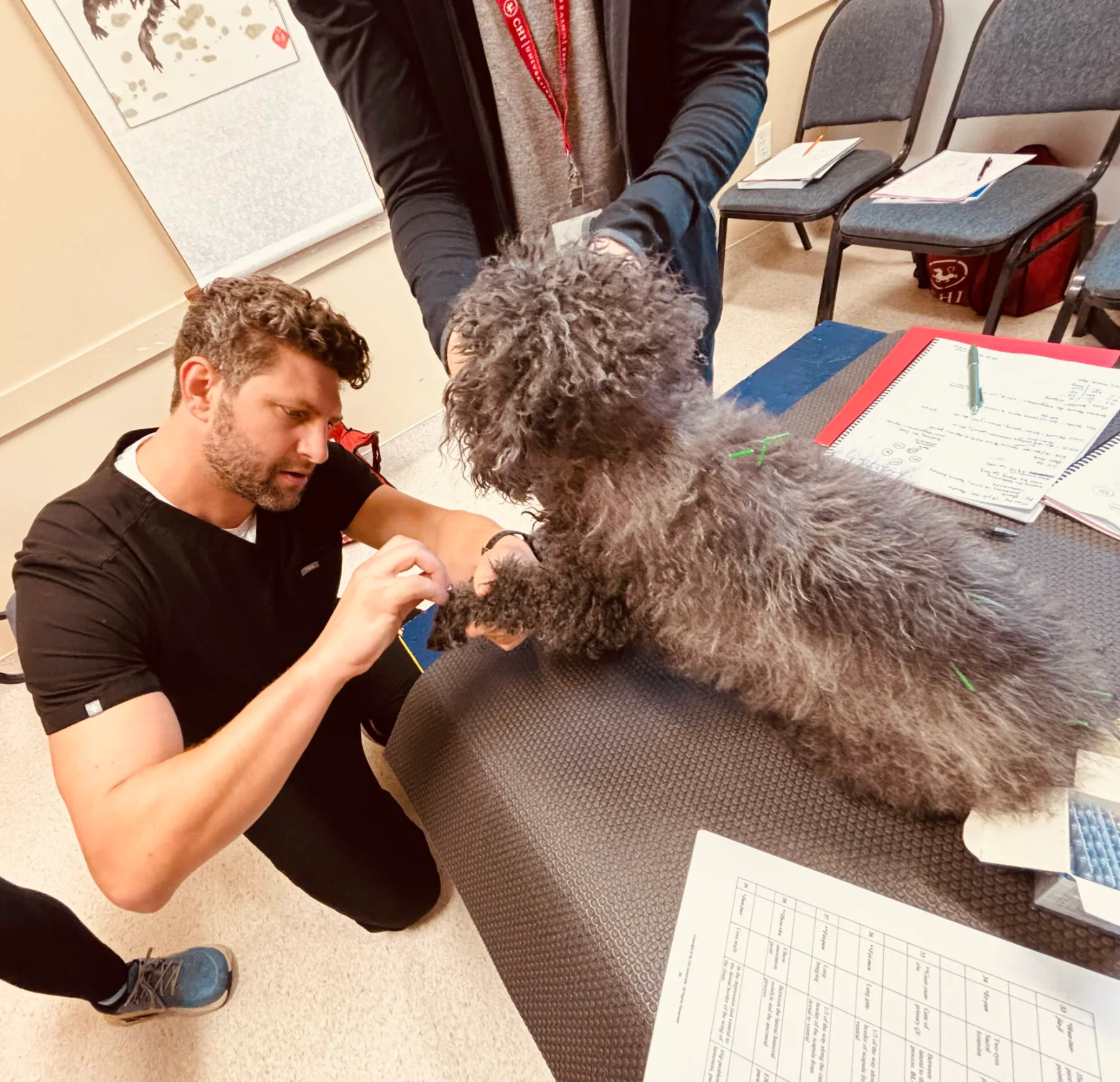
Dr. Ameis training at Chi University’s Certified Veterinary Medical Acupuncture program in Reddick, Florida.
What I see most often
The conditions where acupuncture tends to deliver the most consistent results.
Neck and back pain
IVDD, cervical disc issues, spondylosis, and general spinal stiffness.
Hip and elbow arthritis
Hip dysplasia, elbow dysplasia, and chronic osteoarthritis in senior pets.
Soft-tissue injuries
Strains, sprains, and the kind of “tweaks” that take weeks to heal.
Post-surgical pain
Post-TPLO, post-spinal-surgery, and other procedures with a long recovery curve.
Senior stiffness
The slow-rising, slow-going kind of discomfort that creeps in with age.
Chronic pain not fully controlled
When NSAIDs, Gabapentin, or Librela only get you so far.
Curious if acupuncture might help?
Book an initial consult and we’ll honestly tell you whether it’s a good fit for your pet.