

By Dr. Ezra Ameis, DVM
When most people think of a vet’s office, they picture rubbing alcohol, barking dogs, and the low buzz of anxiety—and that’s just the humans.
But there’s a growing body of science showing that a clinic’s scent environment deeply affects our patients.
Scents and Sensibility
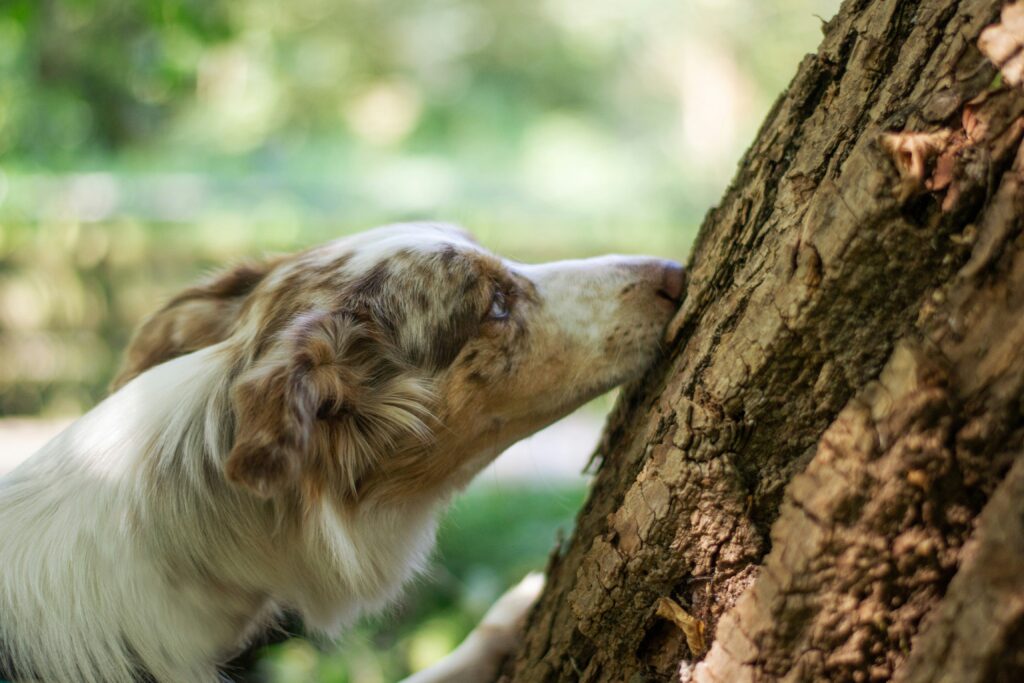
Dogs and cats live in a sensory world that’s radically different from ours—especially when it comes to smell. A dog’s nose has up to 300 million olfactory receptors compared to our 5 to 6 million, and the part of their brain devoted to analyzing smells is proportionally 40 times larger than a human’s. Cats, though often overlooked in this department, are no slouches either. They have roughly 200 million scent receptors and use their vomeronasal organ (Jacobson’s organ) to detect pheromones and subtle chemical cues that are completely invisible to us.
In other words, what’s a faint whiff to us is a tidal wave of information to them. When pets enter a vet clinic, they’re not just seeing a new room—they’re being hit with an invisible history of fear, stress, sickness, and other animals’ scent trails. The antiseptic. The adrenaline. The ghost of a terrified terrier past. It’s overwhelming.
At my hospital, we use calming scent cues—like lavender and chamomile—specifically selected for their safe, species-compatible soothing effects. For our feline patients, we integrate pheromone diffusers such as Feliway, which mimic natural facial pheromones cats release when they feel safe and content.
Science-Backed Calm
This isn’t a gimmick—it’s evidence-based care. A 2018 study in Veterinary Record, the UK’s leading veterinary journal, found that shelter dogs exposed to diffused lavender or chamomile showed significantly less stress barking and pacing behaviors. Similarly, a 2006 study in JAVMA, widely considered the most influential and authoritative journal in the veterinary field found that lavender aromatherapy reduced movement and vocalization in dogs during car travel. These aren’t fringe studies—they’re from the field’s top journals.
At Paw Priority, we combine scent diffusion with gentle music. The goal isn’t luxury—it’s nervous system regulation. When pets are calm, exams are smoother, diagnostics are more accurate, and outcomes improve.
Wellness Culture Meets Clinical Care
Imagine walking into a medical space where both you and your pet take a deep breath—and it helps. This is part of a broader move in veterinary medicine to consider emotional wellness as a component of health, not an afterthought.
So next time your dog walks into our clinic and doesn’t try to turn around? Thank the diffuser.
Dr. Ezra Ameis is an emergency veterinarian and the owner of Paw Priority in West Hollywood, a clinic providing general practice, urgent care, and acupuncture. To suggest a topic or ask a pet-related question, email hello@pp.vet.