

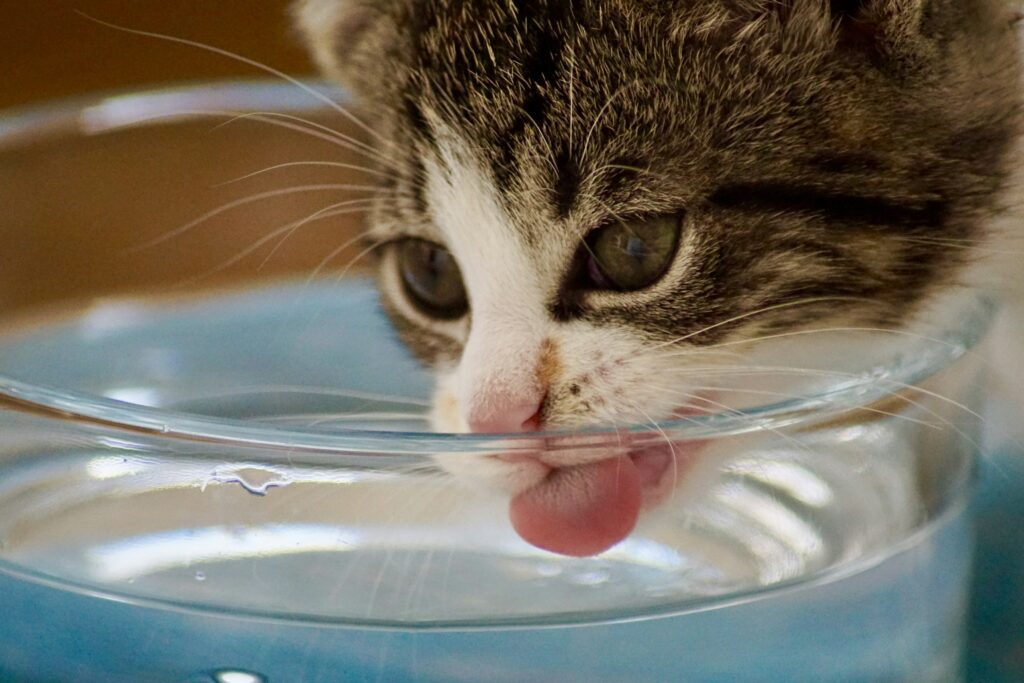
Watch a cat drink, and there barely seems to be any movement.
Watch some dogs drink, and you start wondering whether the bowl was installed incorrectly.
The difference is not manners. There is some interesting physics happening at both water bowls.
In a study published in Science in 2010, researchers used high-speed video to examine how cats drink. The cat curls the tip of its tongue backward and touches the water with the upper surface of the tip. When the tongue rises, water follows it upward in a narrow column. The cat then closes its mouth around part of that column before it falls back into the bowl.
The tongue is not simply scooping up a little serving.
The process depends on timing. The upward-moving water keeps moving briefly, while gravity pulls it back down. The cat catches it during that short opportunity. Domestic cats in the research averaged about four laps per second. Larger cats, including big wild species, lapped more slowly, in keeping with the researchers’ physical model.
Your cat is managing all that without looking especially busy.
Dogs use a related method, but with a more forceful approach. A 2015 study examined drinking in 19 dogs and found that they accelerated their tongues upward more quickly than cats. Their tongues also plunged into the water and curled backward, helping pull up a broad column of liquid.
That curled tongue looks like a ladle, which encouraged the idea that dogs scoop water into their mouths. But much of the water in the apparent scoop falls away. The important part is the column that rises with the tongue and gets caught as the jaws close. The curl helps a dog move more water than it would with a straight tongue, with splashing as part of the process.
I find it wonderful that something this ordinary needed high-speed cameras and mathematical models to explain.
We live with animals for years and assume we understand the basic things they do. Then someone slows down a video of a tongue touching water and reveals a process we had been watching without really seeing.
Try filming your pet’s next drink in slow motion. You may catch a little of that hidden activity.
It will not dry the kitchen floor. But it might make the puddle more interesting.
Ezra Ameis, DVM
Paw Priority, Los Angeles