

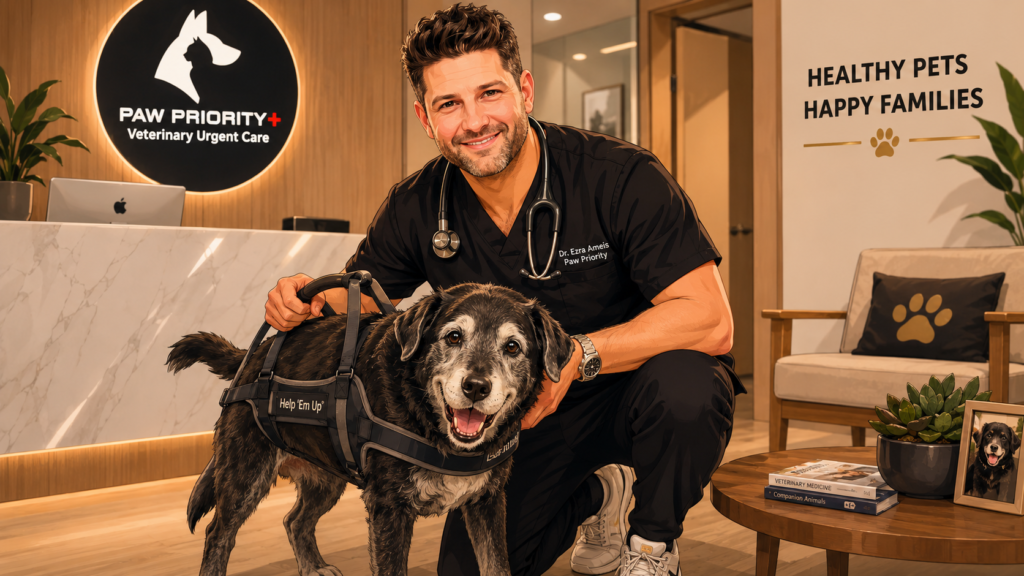
Dogs do not whimper when they hurt. They adapt. That is the cruelest part of aging in a species that cannot tell you what is wrong. Most senior dogs I see for “acting weird” are in chronic pain, and the owner had no idea.
Here are the signs I look for in my own senior patients.
Behavioral changes owners often miss
- Slower to get up in the morning
- Reluctance to jump on the couch, or missing when they try
- Choosing to skip stairs
- Sleeping more, but restlessly
- Grouchier with other pets or kids
- Less interested in walks, or turning around early
- Panting when it is not hot
- Lip-licking or drooling when at rest
Any of these on their own could be aging. Three or more, or a sudden change in any of them, means pain until proven otherwise.
Physical signs
- Muscle wasting on the back legs or over the hips
- Stiff, straight-legged gait after resting
- Reluctance to be touched over the hips or spine
- Difficulty squatting to poop
- Slipping on floors they used to handle
- Nails wearing unevenly
What causes chronic pain in senior dogs
The three big ones:
- Osteoarthritis. By age 8, more than half of dogs have arthritis somewhere. By 12, closer to 90 percent.
- Dental disease. Rotten teeth hurt every time your dog eats or drinks. Many older dogs stop eating dry food not because they are picky, but because it hurts.
- Back pain. Especially in dachshunds, corgis, and other long-backed breeds. Also common in overweight dogs.
What actually helps
The good news: chronic pain in dogs is very treatable. The bad news: your dog will not tell you it is working. You have to watch.
- NSAIDs specific to dogs (never human ibuprofen or Tylenol, which are toxic)
- Adequan injections (a joint support drug we use monthly)
- Weight loss if applicable (this alone can eliminate a limp)
- Acupuncture (I do this in-house, works well for many dogs)
- Joint supplements with real evidence (glucosamine, omega-3s, Dasuquin)
- Physical therapy and controlled exercise
- Dental care to address oral pain
The test
Try this. Ask your vet for a two-week trial of an NSAID. If your dog is suddenly running to the door, jumping on the couch, or bringing you a toy again, they were in pain. That is your answer.
Old age is not a disease. Pain is.
Want a senior wellness plan built for your specific dog? See our senior pet care page.

Care for older pets
Give your senior pet the care they deserve
Our senior pet program covers pain management, mobility support, cognitive care, and quality-of-life planning. Built around age-adjusted bloodwork and honest conversations.