

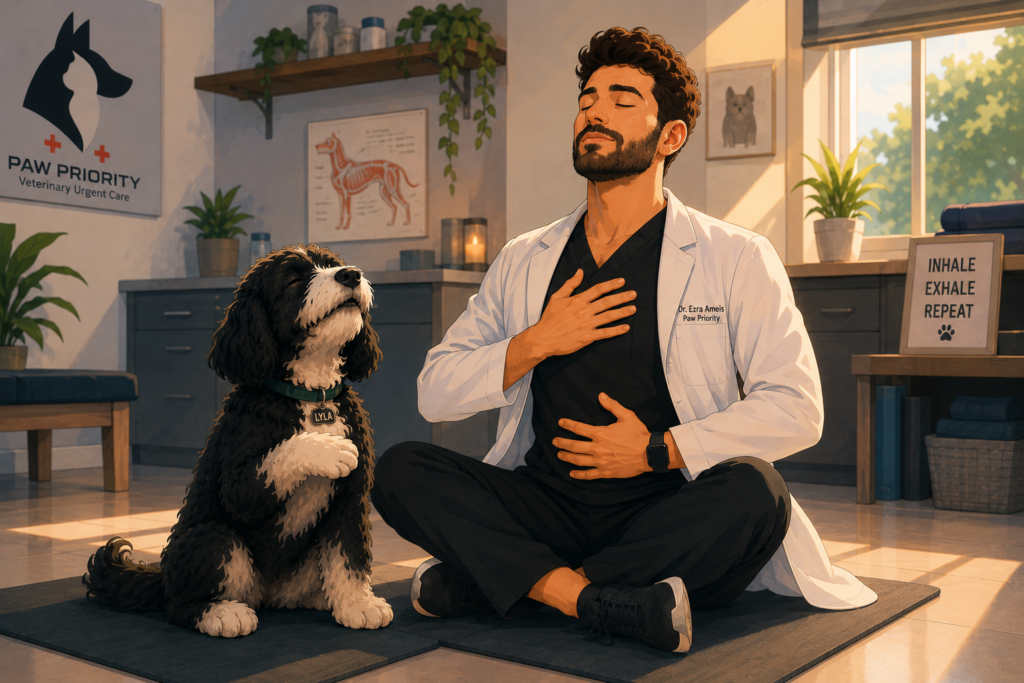
Panting is how dogs regulate heat. They do not sweat through their skin the way people do, so they exchange warm air out of the lungs and pull cool air in. In a normal LA afternoon, a dog panting after a walk or during a car ride is doing exactly what evolution designed them to do.
Not every pant is normal.
Baseline panting.
A healthy dog pants after exercise, in warm weather, during excitement or mild stress, and while cooling down. The rhythm is even, the tongue is pink, and it settles within ten or fifteen minutes of rest and water. If your dog stops panting when the situation stops, that is baseline behavior.
Red flag panting.
The panting I worry about looks different. It shows up when nothing else should be causing it. The dog is lying still in a cool room, and the breathing is heavy, or the gums look pale or gray, or the tongue looks purple. Any of the following patterns get a same-day call:
- Panting at rest. No exercise, no heat, no stress, and the dog is still working to breathe. That is not thermal regulation. That is a symptom.
- Panting with a distended belly. A common early sign of bloat (GDV), particularly in deep-chested dogs. Pacing, dry heaving, and a swollen abdomen with panting is an emergency. Do not wait.
- Panting with pain posture. A hunched back, a tucked belly, a reluctance to lie down, or a stiff gait paired with heavy panting often means pain we cannot see. Pancreatitis, back pain, and internal bleeding all present this way.
- Panting with pale or blue gums. Check the color of the inner lip. Pink is good. White, gray, or purple is not.
- Panting after any possible toxin exposure. Xylitol, marijuana, medications, snail bait, and rodenticides all cause panting. If you find a chewed bottle or a suspicious wrapper, come in.
The LA heat conversation.
Los Angeles gets deceptively hot. The marine layer breaks late morning, the pavement climbs into the 140s in direct sun, and dogs on the sidewalk cook from the ground up. Heat stroke does not require a hundred-degree day. It requires a poorly ventilated car, a shadeless walk at 2 PM, or a hike on Runyon at the wrong hour.
Early heat stress looks like heavy panting with a wide, deep tongue, thick ropey saliva, and stumbling. Wet the paws and belly with cool (not cold) water, get into shade, and call. Full heat stroke is a hospital case. Do not try to ride it out at home.
Slower causes worth naming.
Some panting is chronic. It creeps in over weeks and looks like a habit. A few common culprits:
- Cushing’s disease. Older dogs with a pot-belly, thin skin, and increased thirst who pant at night. Diagnosed with bloodwork.
- Laryngeal paralysis. Older Labradors especially. Loud, raspy breathing that gets worse with heat and excitement.
- Anemia. Pale gums, low energy, panting from the effort of moving oxygen. Bloodwork tells the story.
- Heart disease. Coughing at night, exercise intolerance, panting that outlasts the trigger. Especially in small older dogs (mitral valve) and Boxers, Dobermans (DCM).
- Anxiety. A real cause of panting. But rule out the medical list first. Anxiety is a diagnosis of exclusion.
The at-home checklist.
- Check the gums. Lift the lip. Pink is fine. Pale, gray, blue, or brick red is not.
- Check the temperature. If you have a rectal thermometer, use it. A dog running over 103.5 in a cool room is a call. Over 104.5 is a same-day visit.
- Count the breaths at rest. A dog sleeping should be under 30 breaths per minute. Over 40 while asleep is abnormal.
- Note posture. Is the dog willing to lie flat, or is he sitting upright with elbows out to breathe? Elbows out is a warning sign.
- Think back 24 hours. Any new medications, any chewed packaging, any hot walks, any garden chemicals.
When to come in.
If the panting is new, out of proportion, does not resolve with rest, is paired with any of the red flags above, or the dog seems off in any other way, we should see him. Panting is one of the few symptoms that spans every organ system in the body. It deserves a proper look.
Ezra Ameis, DVM
Paw Priority, Los Angeles